Retail revolution comes to Uzbekistan
September 12, 2019
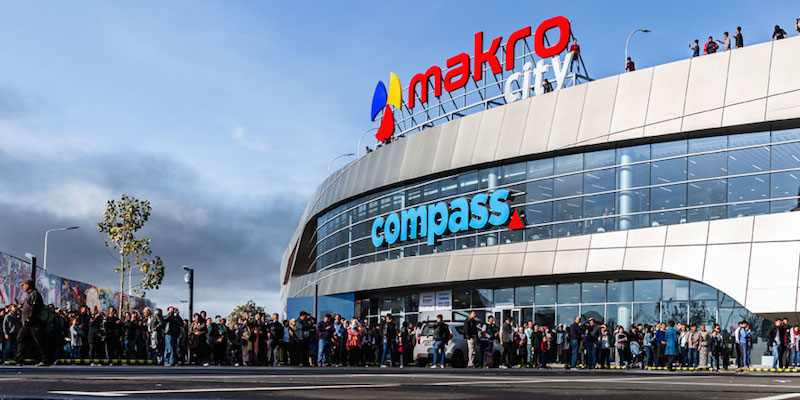
Tashkent’s gleaming Compass Mall sits across the ring road from the hulking and heaving Qo'yliq Dehqon Bozori, one of the city’s largest traditional markets. When Uzbek developer Orient Group was selecting the site for the mall, they were no doubt thinking about convenience. The location, right next to a major thoroughfare and adjacent to a market that already attracts thousands of shoppers each day, no doubt made it easier to lure shoppers into the new mall’s skylit corridors. But the choice of location can also be seen as a statement, putting in stark contrast Uzbekistan’s retail ways of old and the new formats that are rapidly changing the consumer landscape.
As Uzbekistan continues is economic reforms under President Shavkat Mirziyoyev, the country’s large consumer sector has been among the first to see an influx of new investment and the arrival of new goods and services. With a population of around 33 million, Uzbekistan’s market is slightly smaller than the Polish market back in 1990, at the outset of economic transitions in Eastern Europe. But Uzbekistan’s GDP per capita is actually slightly higher than Poland’s level at the time.
Considering rising incomes and growing household purchasing power, the market potential is clear. According to data compiled by the World Bank, household final consumption reach a new local currency peak of 221 trillion Uzbek som last year, equivalent to approximately $27 billion at the time.
Orient Group, a major conglomerate active in real estate development, were early movers in Uzbekistan’s retail revolution, opening the country’s first modern shopping mall, Tashkent’s Samarqand Darvoza, in 2014. Spanning 35,000 square meters across two floors, Compass, which opened last year, is the group’s flagship development and is managed by group subsidiary TMG.
The mall includes well-known Western brands, such as French cosmetics boutique Yves Rocher and Danish jewelry boutique Pandora. But the retail offerings also point to Uzbekistan’s unique position at the heart of Europe and Asia—Turkish fashion retailer LC Waikiki, Chinese lifestyle retailer MINISO, and Russian youth fashion chain Oodji all have large stores in the mall. A food court includes Western staples such as Wendy’s and KFC as well as local favorites like Chopar, a pizza chain.

Orient Group is also the mall’s anchor tenant through it’s Makro supermarket chain. In terms of store size and merchandising Makro stores are comparable with the hypermarkets of French retail giant Carrefour, whose own market entry has been the subject of persistent rumors—an indication of the growth potential in food retail.
Makro’s sole competitor is Korzinka.uz, led by ebullient Uzbek entrepreneur Zafar Khashimov. Korzinka.uz operates nearly 50 supermarkets, discount stores, and convenience stores. The typical Korzinka.uz store is smaller than Makro but has a comparable, if slightly less premium product selection. Korzinka also operates two fashion retailers, Red Tag and Flo, which often share space with Korzinka stores.
Given the fast expansion of Orient’s mall and Korzinka’s supermarkets, including more recent growth beyond Tashkent to Uzbekistan’s other major cities, it is clear that Uzbek consumers have taken to the new retail formats and the wide selection of products—particularly packaged foods and personal care products—on sale.
But further growth, particularly beyond Tashkent, will require improvements in both the infrastructure and legal frameworks which underpin the consumer sector. Uzbekistan sorely needs upgraded warehousing and distribution solutions, particularly in the “cold chain” required to move perishable goods.
The government will also need to improve its regulation of the consumer sector. A recent move to reassign the Ubzek Intellectual Property Office (IPO) to the Ministry of Justice has given commercial actors new confidence that copyright and trademark infringement can be challenged in court. In early August, the IPO put forward clearer guidelines for the recognition of trademarks, an important if belated reform for the likes of FMCG giants Néstle and Carlsburg, which manufacture products locally in Uzbekistan.
Improvements in intellectual property protections will however introduce new headaches as more companies seek to import foreign products to Uzbekistan. Fearing increased competition, local manufacturers have taken to lobbying the government to introduce tariffs and other protectionist measures in order to stave competition from popular foreign brands. In some cases, the government has obliged. A recent and sudden increase in the import duty applied to shoes hit a number of foreign brands and their local agents.
Shopping in the traditional bozors, or markets, will continue to be the dominant retail experience in Uzbekistan for years to come. But for an emerging middle class, shopping malls like Compass show the way to a newly affluent lifestyle.
Eurasian Investor and Adam Smith Conferences will present the UzInvest Forum on November 27 in London, a major gathering for investors, executives, and officials focused on Uzbekistan’s promising economy. Learn more: www.uzinvestforum.com
Photo: Orient Group

